
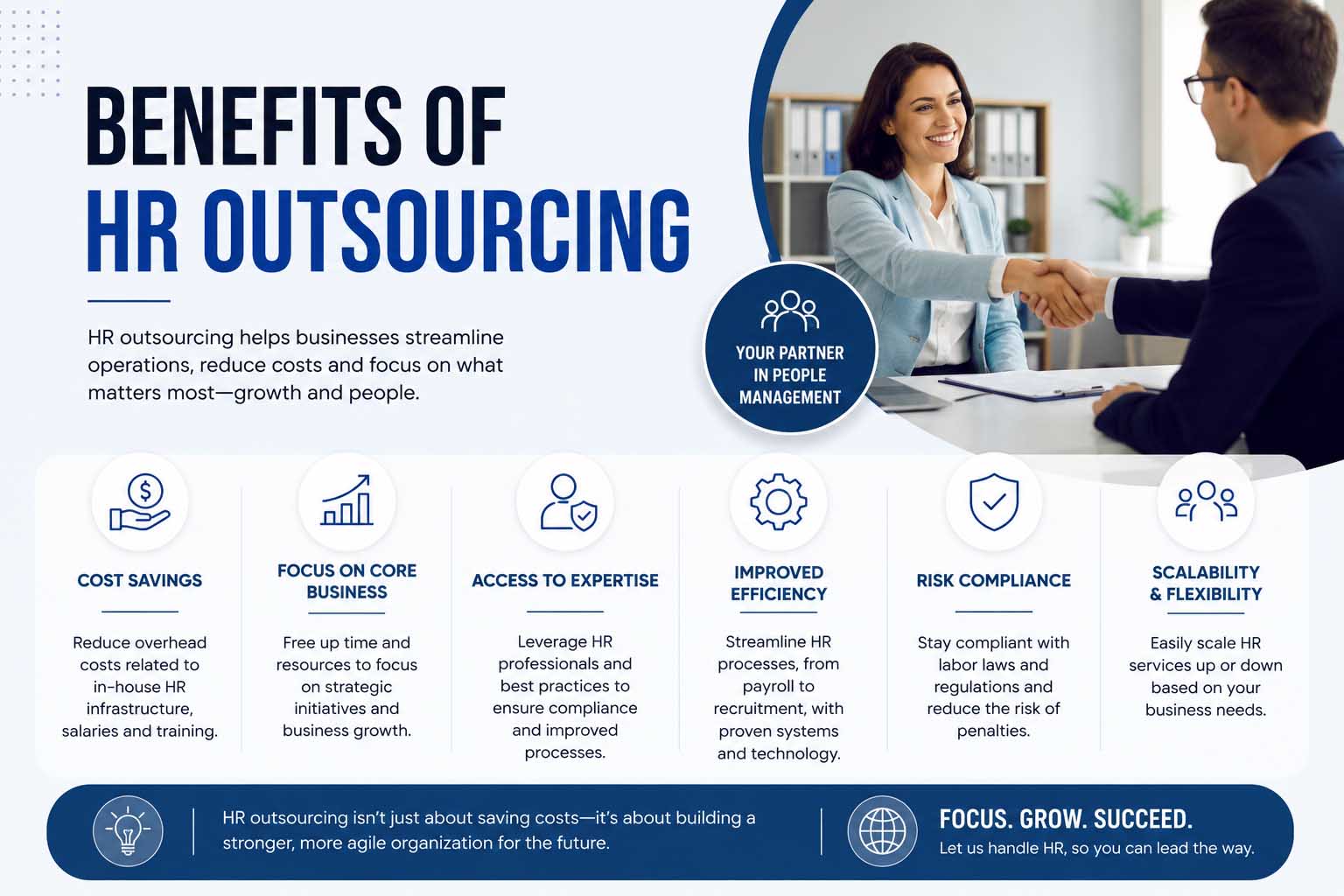
Benefits of HR Outsourcing: Why More Businesses Are Making the Switch
If you’ve ever wondered whether outsourcing human resources is worth it, you’re not alone. The benefits of HR outsourcing have made it one of the fastest-growing business strategies for companies of every size. Instead of building a large in-house HR department, many organizations partner with outside specialists to handle everything from payroll and hiring to compliance and employee support.
For startups, small businesses, and even established companies, HR outsourcing can reduce administrative work while giving leaders more time to focus on growth. The key is understanding what can be outsourced, what should remain internal, and how to choose the right partner.
What Is HR Outsourcing?
HR outsourcing is the practice of hiring an external company to manage some or all human resources functions.
Depending on business needs, an outsourcing provider may handle:
- Payroll administration
- Employee onboarding
- Recruitment
- Benefits administration
- HR compliance
- Performance management
- Policy development
- Training support
Companies that want a deeper explanation of available solutions may also benefit from learning about Human Resources Outsourcing Services, which covers the different service models businesses can choose.
Benefits of HR Outsourcing for Modern Businesses
The biggest benefits of HR outsourcing come from combining expert support with operational efficiency. Rather than hiring several HR specialists, businesses gain access to experienced professionals across multiple areas.
Common advantages include:
- Lower operating costs
- Better legal compliance
- Faster hiring
- Improved employee experience
- Reduced administrative workload
- Easier business scaling
- Access to HR technology
- Expert guidance on workplace issues
These benefits often become more valuable as a company grows.
Cost Savings Without Sacrificing Quality
Hiring an internal HR team involves salaries, benefits, software, office space, and ongoing training.
By outsourcing selected HR functions, businesses often pay only for the services they actually use.
For example:
| In-House HR | Outsourced HR |
|---|---|
| Multiple employee salaries | Predictable service fees |
| HR software purchases | Technology included by many providers |
| Internal compliance training | Access to HR specialists |
| Recruiting tools | Shared recruiting resources |
While pricing varies by provider and company size, outsourcing can be more affordable than maintaining a fully staffed HR department.
Benefits of Outsourcing HR Services for Compliance
Employment laws change regularly.
Businesses must stay current with regulations covering:
- Employee classifications
- Wage and hour requirements
- Leave policies
- Workplace safety
- Hiring practices
- Record keeping
One of the major benefits of outsourcing HR services is having professionals who monitor changing regulations and help reduce compliance risks.
Although outsourcing doesn’t eliminate employer responsibility, it provides valuable expertise that helps businesses avoid common mistakes.
Better Hiring and Onboarding
Recruitment takes time.
Writing job descriptions, reviewing resumes, scheduling interviews, verifying candidates, and onboarding new employees all require careful planning.
HR outsourcing providers often streamline these processes by using:
- Applicant tracking systems
- Standardized interview methods
- Digital onboarding tools
- Background screening services
As a result, companies can fill positions more efficiently while creating a better experience for candidates.
Supporting Different Types of Employees
Today’s workforce is more flexible than ever.
Many organizations now manage full-time staff, contractors, seasonal workers, and hybrid teams at the same time. Understanding different types of employees helps HR providers recommend appropriate hiring practices, benefits, and compliance procedures for each employment category.
That flexibility allows businesses to adapt their workforce without creating unnecessary administrative complexity.
More Time for Leadership
Business owners rarely start companies because they enjoy processing payroll or updating employment paperwork.
Administrative HR tasks consume valuable time that could otherwise be spent on:
- Product development
- Customer service
- Sales
- Marketing
- Strategic planning
Outsourcing routine HR responsibilities allows leadership teams to focus on activities that directly support business growth.
Benefits of Employee Retention Through Better HR
Employee turnover is expensive.
Replacing experienced workers often involves recruiting costs, onboarding time, training expenses, and temporary productivity losses.
Professional HR providers help improve the employee experience by supporting:
- Structured onboarding
- Performance reviews
- Benefits administration
- Employee communication
- Workplace policies
- Career development
These improvements contribute to the long-term benefits of employee retention, helping organizations reduce hiring costs while building stronger teams.
Access to Better HR Technology
Modern HR relies heavily on digital tools.
Many outsourcing firms already provide systems for:
- Employee self-service
- Payroll management
- Time tracking
- Benefits enrollment
- Performance reviews
- Document storage
Instead of purchasing multiple software platforms separately, businesses often gain access through their outsourcing agreement.
This reduces setup costs while improving efficiency.
Benefits of Outsourcing HR Department During Growth
Rapid growth creates new HR challenges.
A company with ten employees has very different needs than one with one hundred.
One of the biggest benefits of outsourcing HR department functions is scalability.
As the organization expands, outsourced providers can typically add:
- Recruitment support
- Additional payroll processing
- Compliance services
- Employee relations guidance
- HR reporting
Businesses avoid repeatedly hiring new internal HR specialists during every stage of growth.
Choosing the Right HR Outsourcing Partner
Not every provider offers the same services.
Before making a decision, consider:
Industry Experience
Look for providers that understand your industry and employment requirements.
Service Flexibility
Some businesses need complete HR management, while others only require payroll or compliance support.
Technology Integration
Choose a provider whose software works well with your existing systems.
Communication
Clear communication matters just as much as technical expertise.
Ask how employees can contact HR specialists and how quickly issues are resolved.
Security
HR data contains sensitive employee information.
Verify that providers use strong security practices to protect payroll records and personal data.
Potential Challenges to Consider
Although outsourcing offers many advantages, it isn’t perfect for every organization.
Possible drawbacks include:
- Less direct control over some HR processes
- Service fees
- Adjustment period during implementation
- Dependence on an external partner
- Differences in communication styles
These concerns can often be minimized by choosing an experienced provider and establishing clear expectations from the beginning.
HR Outsourcing vs In-House HR
| HR Outsourcing | In-House HR |
| Lower startup costs | Greater direct control |
| Access to specialists | Internal company knowledge |
| Easier scalability | Immediate face-to-face support |
| Built-in HR technology | Customized internal processes |
| Compliance expertise | Higher staffing costs |
Many growing businesses use a hybrid approach by keeping strategic HR leadership in-house while outsourcing administrative tasks.
Workplace Flexibility Matters
Modern organizations often support remote, hybrid, and office-based teams simultaneously.
Understanding different types of work environments helps HR professionals create policies that remain fair and consistent regardless of where employees perform their work.
Flexible workplace policies also improve employee satisfaction while making recruitment easier.
Managing Full-Time and Part-Time Staff
Businesses frequently employ both full-time and part-time workers.
Knowing the difference between part time and full time employment helps HR teams administer benefits, schedules, payroll, and legal requirements correctly.
Experienced outsourcing providers assist employers with these distinctions to reduce administrative errors.
Best Practices for Successful HR Outsourcing
Companies typically achieve better results when they:
- Define clear business goals
- Choose services based on current needs
- Maintain regular communication
- Review performance regularly
- Keep leadership involved in strategic HR decisions
- Protect employee privacy
- Monitor service quality
Outsourcing works best as a partnership rather than simply handing responsibilities to another company.
Common Mistakes Businesses Make
Avoid these common errors:
- Choosing a provider based only on price
- Failing to define responsibilities
- Ignoring employee communication
- Overlooking data security
- Skipping regular performance reviews
- Expecting immediate results without proper implementation
Taking time to plan the transition usually leads to smoother long-term outcomes.
Frequently Asked Questions
What are the benefits of HR outsourcing?
The primary benefits include lower costs, improved compliance, access to HR expertise, better hiring processes, scalable support, and more time for business leaders to focus on growth.
Is HR outsourcing only for small businesses?
No. While small businesses often benefit significantly, medium-sized and large organizations also outsource HR functions to improve efficiency and access specialized expertise.
Can businesses outsource only payroll?
Yes. Many providers allow companies to outsource individual HR functions such as payroll, recruitment, benefits administration, or compliance rather than the entire HR department.
Are employees still managed by the business?
Yes. Company leadership continues making employment decisions while outsourced HR providers support administrative and operational processes.
Is HR outsourcing secure?
Reputable providers use secure systems to protect employee information. Businesses should always evaluate a provider’s security practices before signing an agreement.
Making HR a Competitive Advantage
The benefits of HR outsourcing extend well beyond reducing paperwork. Businesses gain access to experienced professionals, modern technology, and scalable support that can strengthen hiring, improve compliance, and create a better employee experience.
The best results come from choosing a trusted partner, setting clear expectations, and reviewing the relationship regularly as your business continues to grow.